- Introduction
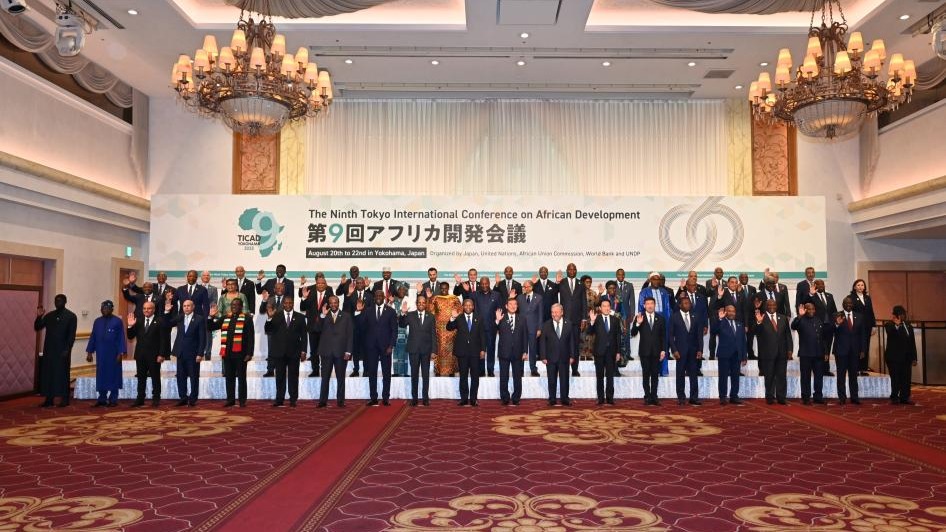
We, the Heads of State and Government and delegations of Japan and African Union Member States, together with representatives of Co-organizers, namely, the African Union Commission (AUC), the United Nations (UN), the United Nations Development Programme (UNDP), and the World Bank met in Yokohama, Japan, from 20th to 22nd August 2025, for the Ninth Tokyo International Conference on African Development (TICAD 9). We were pleased to welcome high-level representatives from regional organizations, international organizations, the private sector, civil society organizations of Japan, and legally and nationally registered civil society organizations of Africa, including women and youth, and environmental stakeholders from Japan and Africa.
1.2 Since 1993, TICAD has provided a unique multilateral platform for a broad range of stakeholders and has championed international cooperation under the guiding principles of African ownership, international partnership, and openness. TICAD provides a valuable forum for intellectual discourse that underpins the collaborative co-creation of innovative solutions across Africa, Japan and the international community. This platform has evolved in response to changing global and African priorities and has supported creativity and resilience across Africa to overcome the impacts of various crises, build resilience against crises like COVID-19, extreme weather events like cyclones, and address governance and security challenges in some parts of the continent.
1.3 We acknowledge that TICAD 9 is broadly aligned to Africa’s development priorities, as articulated in the African Union (AU) Agenda 2063 Second Ten Year Implementation Plan (STYIP) goals and priorities – “The Africa We Want”, and the 2030 Agenda for Sustainable Development and its Sustainable Development Goals. TICAD 9 is also positioned at the crossroads of global initiatives like the Pact for the Future, adopted at the UN General Assembly by the world leaders in September 2024, the Fourth International Conference on Financing for Development (FfD4) and the G20 this year presided by South Africa. We intend to activate the Africa-Japan partnership by announcing concrete programs and initiatives. This alignment reinforces national efforts to achieve sustainable development, promote climate resilience, and secure long-term access to sustainable development.
1.4 Against this backdrop, we gather in Yokohama to co-create innovative and lasting solutions that will enable diverse and dynamic African countries to achieve structural transformation and address the current economic insecurity, human insecurity, inequality challenges, to accelerate the implementation of the Second Ten Year Implementation Plan of the AU Agenda 2063 for a peaceful, integrated, and prosperous Africa. We underscore the importance of ensuring that TICAD outcomes reflect a balanced integration of the shared vision and mutual interest of AU Member States and Japan in the spirit of equitable partnership
2. Current Situation
2.1 The IMF’s April 2025 World Economic Outlook painted a gloomy picture of global economic prospects, noting that GDP growth is subdued, debt levels remain high, protectionism is slowing world trade, the world is becoming more unequal, and rising inflationary pressures threaten macroeconomic stability. Poverty in all forms and dimensions remains the greatest global challenge, particularly in Africa, and its eradication is an indispensable requirement for sustainable development. Furthermore, recent geo-strategic shifts signal a weakening of multilateralism and multilateral institutions. While Africa’s GDP growth forecasts for 2025 and 2026 are above global averages, they are still insufficient to address poverty, create decent jobs and service debt. Although it possesses significant resources and avenues for growth, the continent remains particularly vulnerable to external shocks, and needs to foster and capitalize on creating enabling environments to promote innovation in all spheres to accelerate socio-economic transformation. There is significant room for the private sector to engage in Africa.
2.2 We commend the recent democratic progress achieved in several African countries. However, we remain deeply concerned about the persistent hotspots of tension and armed conflict, particularly due to acts of terrorism in various parts of the continent, which continue to trigger severe humanitarian crises. The instability undermines economic prospects, negatively impacts human development and depletes natural, physical and financial resources, increases perceived risks, and places a heavier burden on public finances. In response to these challenges, coordinated, gradual and context-specific actions are essential to reverse these dynamics and fully harness emerging opportunities.
2.3 With these challenges in mind, we acknowledge the urgent need to address existing and emerging challenges in an interrelated and holistic manner. We recognize the continued relevance of the three pillars of TICAD --- economy, society, peace and stability – in establishing the preconditions for inclusive growth and sustainable development. We also enhance cooperation based on the concept of human security in response to a wide range of social inadequacies in critical sectors such as health, education, and social security, compounded by various global challenges such as climate change, lack of energy, new digital technology including Artificial Intelligence, cybersecurity, disaster risk reduction, and human well-being.
2.4 Just as in 1993, TICAD can once again provide a platform to support inclusive growth and sustainable development in Africa by spearheading innovative solutions for Africa that reflect, and respond to, current and future global challenges. In this context, the theme for TICAD 9, “Co-create innovative solutions with Africa” speaks to the need for stronger and more strategic partnerships aimed at reinforcing operational and mutually beneficial dimensions of TICAD and that also fosters and develops homegrown and collaborative solutions with Africa.
2.5 While witnessing tremendous opportunities with a young population and abundant resources, we recognize multifaceted challenges for realizing sustainable economy and development, inclusive society, and lasting peace, security and stability. We also stress the importance of increasing access to technology, trade and investment, fostering economic diversification and value-addition, and investing in infrastructure, human capital and home-grown innovation, improving access to affordable finance for development and supporting African countries in economic governance and business environment. In this context, TICAD 9 aims to support public-private partnerships, empowerment of youth and women, regional integration and connectivity within and beyond the region as well as the need to build inclusive and responsible global governance that promotes a free, open and fair international order based on the principles of international law, where Africa is an effective global player and partner.
3 Three TICAD Pillars
Economy
3.1.1 We note the fact that recent global and Africa’s GDP growth trends are insufficient to ensure the attainment of the Vision and Aspirations of Agenda 2063. Despite significant economic and fiscal reforms, we note with concern that the high cost of capital, largely due to weak credit ratings of some African countries, and the high cost of debt services are exacerbating vulnerabilities and diverting Africa’s resources away from financing development. We call upon credit rating agencies to refine their methodologies, while respecting their independence, to account for investments, lengthen time horizons for credit analysis, publish long-term ratings based on scenario analysis, and positively reflect the long-term debt sustainability benefits of voluntary debt restructurings and treatments. We stress that increasing trade protectionism is limiting Africa’s access to global markets and restricting the proportion of global value chains that benefit the continent. We will take action to address the high debt premium of borrowing countries, especially in Africa, that pay significantly higher interest rates compared to their peers despite similar risk ratings. Actions will include, but are not limited to, capacity-building to enable them to engage effectively with financial market actors, including credit rating agencies. Furthermore, we welcome the establishment of the African Credit Rating Agency (AfCRA) and look forward to its full operationalization. We also note the imperative need to harness Africa’s demographic dividend through investment in people and promotion of decent work, especially for Africa’s youthful population through youth apprenticeship and tax incentives for firms employing youth in the AI/data sectors.
We endeavor to accelerate Africa’s regional economic integration and foster an enabling business environment to strengthen the role of the private sector as an engine of productive transformation to boost intra-Africa trade. We aim to accelerate efforts to develop value-chains addition in Africa and integrate African countries into global supply chains through a free, open, and fair trade and investment environment, so as to be able to secure a fair share in the growth of world trade and investment commensurate with the needs of their economic development. Recognizing global supply chain shifts, we will encourage Japan’s investment in the manufacturing industry in Africa, with pilot economic zones to support electronics, green tech, and automotive industries. We commit to accelerating efforts for master planning with the objective of developing special economic zones and industrial zones to develop industrial value-chains. We endeavor to support Africa to export value-added goods to Japan, through initiatives such as agro-industrial zones, export certification hubs, and buyer-supplier networks. Building on the accomplishments of the Eighth Tokyo International Conference on African Development (TICAD 8), we will continue to promote regional integration and connectivity through the African Continental Free Trade Area (AfCFTA). We also stress the importance of connectivity with other regions such as the Indo-Pacific region. We take good note of the initiative of a Free and Open Indo-Pacific as announced by Japan at TICAD VI in Nairobi, Kenya. We acknowledge Japan’s contribution in the past years to enhance connectivity, resilient institutions and human resources development in Africa. The strategic significance of Africa continues to grow, driven by the continent’s remarkable demographic expansion and dynamic market potential. We reaffirm the steadfast partnership between Japan and African nations as we jointly seek to deepen economic engagement that delivers tangible benefits to our peoples and contributes to the objectives set forth in Agenda 2063. To ensure mutual benefit, we hope that Japanese investments will align with various projects of AfCFTA and support the development of regional value chains.
3.1.2 We recognize the importance of co-creating an enabling environment to drive the digital transformation of Africa and stress the need for effective and responsible governance and utilization of digital and emerging technologies, including artificial intelligence (AI), as well as the need for technology transfer on mutually agreed terms, capacity and institution building. We also recognize the importance of ethical and responsible utilization of data as a foundational element of digital transformation, including facilitating cross border data flows based on regional frameworks such as the AU Data Policy Framework and Data Free Flow with Trust (DFFT), while making data available to drive innovation and ensuring protection of privacy and human rights in the digital space. We reaffirm that effective and responsible utilization of digital technology, including AI, satellite data, and clean energy as well as the adoption of good practices could facilitate the co-creation of innovative solutions to the challenges facing Africa and the world. Increased collaboration with the private sector is essential for catalyzing transformative and sustainable solutions. We also highlight that it is essential to build inclusive AI governance that enables innovation and promotes human-centric, safe, secure and trustworthy AI so that the benefits of AI can be enjoyed by all. We will continue to work together to enhance capacity and institution building, as well as AI governance and support our efforts toward the enhancement of such AI governance, including through G20’s AI for Africa, Global Digital Compact and AU’s Continental Artificial Intelligence Strategy. We note Japan’s commitment to making greater contributions to AI development including through the Hiroshima AI Process and encourage further participation by African countries. We encourage expanded cooperation in digital infrastructure and innovation ecosystems to accelerate Africa’s digital transformation. Japan’s expertise in robotics, AI, and smart cities can play a pivotal role in building resilient African economies. We encourage joint Africa-Japan initiatives to support AI development including the promotion of hubs for innovation to nurture startups, promote digital skills, and facilitate technology transfer on mutually agreed terms, across the continent. In this respect, we also recognize the importance of supporting the establishment of AI Centers of Excellence to promote domestic AI innovation and enable the development of home-grown AI solutions as well as existing ones.
3.1.3 We recognize the critical role of efficient transport and logistics infrastructure in unlocking Africa’s trade potential, we commit to accelerating investments in sustainable and resilient infrastructure networks across road, rail, maritime, and aviation modes of transport. To address the connectivity challenges, we recognize the need to improve transport infrastructures and services as key enablers for socio-economic development, enabling the improvement of trade and business and creating easy access to markets. In this regard, we underline the importance of supporting key initiatives that will improve intra-Africa transport connectivity, including the full operationalization of the Single African Air Transport Market (SAATM). We also recognize the importance of air transport connectivity between Africa and Japan and stronger air connectivity, as well as enhanced cooperation and strategic partnerships in the future, the implementation of the African Integrated Railway Network (AIRN), establishment of multimodal and smart corridors, accelerating the implementation of the Trans-African Highway links and work to support improvement of ports and shipping industry.
We underscored the need to partner in building sustainable and smart cities with adequate urban mobility solutions that respond to the rapid urbanization and resilience building, which supports an inclusive transport system. We therefore encourage innovative solutions in the transport sector, including public and non-motorized systems.
We reaffirm our commitment to continuing to support the implementation of the Programme for Infrastructure Development in Africa (PIDA) as a key initiative of Africa to address the infrastructure gaps in the continent. We concur in continuing to provide support towards PIDA project preparation and financing, and by building local capacities to implement and sustain its transformative priority projects.